


- Step-by-Step Tutorial: How to Execute a Successful BC Game Deposit
- Financial Thresholds: Analyzing the BC.Game Minimum Deposit Structure
- Timeframes: What is the Official BC.Game Deposit Time?
- Troubleshooting Hub: Resolving a BC Game Deposit Problem
- Step-by-Step Diagnostics: Action Plan When Funds Are Delayed
- Automated Balance Enhancements and Loyalty Account Onboarding
- Mobile Interface Security: Funding Your Account via Smartphones
- Escalating Unresolved Cashier Discrepancies to Technical Specialists
- Conclusion: Reliable and Fast Asset Auditing for Global Players
- FAQ
Step-by-Step Tutorial: How to Execute a Successful BC Game Deposit
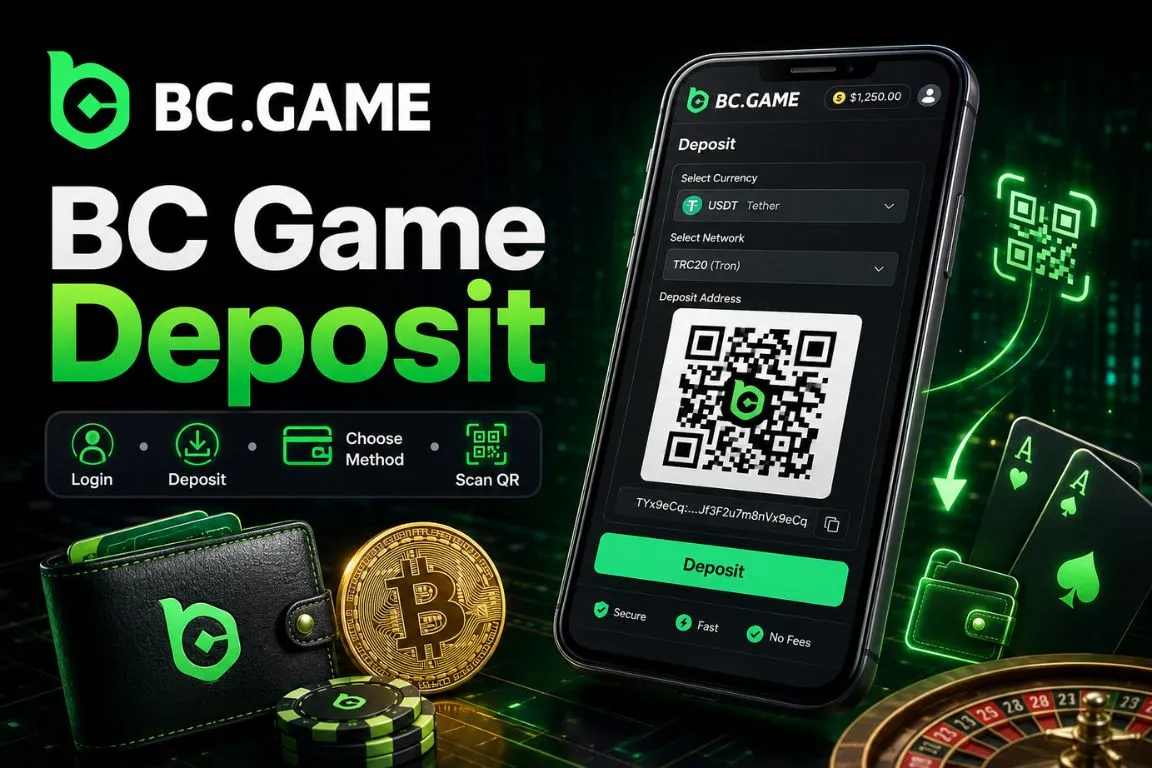
Funding the balance through the cashier normally requires only a few minutes when the correct network and payment method are selected. The structure remains similar across desktop browsers, smartphones, and progressive web applications.
A standard deposit sequence usually follows these steps:
- Authenticate your profile using your secure personal credentials.
- Locate and click the prominent «Deposit» interactive interface button at the top header.
- Select your operational asset category: Cryptocurrencies or local Fiat options.
- Choose your specific network or local banking provider from the directory.
- Copy the generated unique destination address or scan the QR code to finalize the transfer.
For many users relying on both mobile banking and crypto wallets, QR-based funding has become one of the fastest ways to complete a deposit without manual address typing.
Financial Thresholds: Analyzing the BC.Game Minimum Deposit Structure
Questions about the BC Game minimum deposit appear frequently because the platform does not operate with one universal limit across all currencies and networks. Instead, the minimum deposit on BC Game changes dynamically depending on the selected token, blockchain infrastructure, and local fiat provider.
This structure helps reduce network congestion errors and prevents situations where tiny transfers become economically unviable due to transaction fees or confirmation requirements. When configuring your external wallet for transmission, verifying the official minimum deposit in BC Game parameters reduces the risk of delayed or lost routing.
Cryptocurrency Minimum Deposit Configuration
| Token Name | Recommended Blockchain Network | Minimum Deposit Equivalent | Confirmation Requirement |
| USDT | TRC-20 | Dynamic | Usually low |
| BTC | Bitcoin | Dynamic | Multiple confirmations |
| ETH | Ethereum | Dynamic | Network-dependent |
| LTC | Litecoin | Dynamic | Moderate |
Each token behaves differently because blockchain networks process incoming transactions according to separate operational rules and mempool conditions.

Time left: 13:47
Last used 6 minutes ago
Dynamic Pricing and Fiat Gateway Entry Floors
Fiat entry limits are also dynamic. The official BC.Game minimum deposit threshold can vary by supported currency, payment route, card processor, banking partner, and regional gateway shown inside the cashier at the moment of payment.
Global Fiat Funding Channels
| Currency Group | Typical Funding Route | Availability | Currency Group | Typical Funding Route |
| USD and supported local fiat currencies | Bank cards, bank transfers, payment providers | Region-dependent | USD and supported local fiat currencies | Bank cards, bank transfers, payment providers |
| EUR and supported European currencies | SEPA, cards, local processors | Region-dependent | EUR and supported European currencies | SEPA, cards, local processors |
| GBP and supported local currencies | Bank transfer, cards, payment gateways | Region-dependent | GBP and supported local currencies | Bank transfer, cards, payment gateways |
| Other supported fiat currencies | Local banking partners and payment processors | Region-dependent | Other supported fiat currencies | Local banking partners and payment processors |
Local clearing rules and exchange conditions may occasionally shift these entry floors, especially during periods of elevated banking traffic or currency volatility.
Timeframes: What is the Official BC.Game Deposit Time?
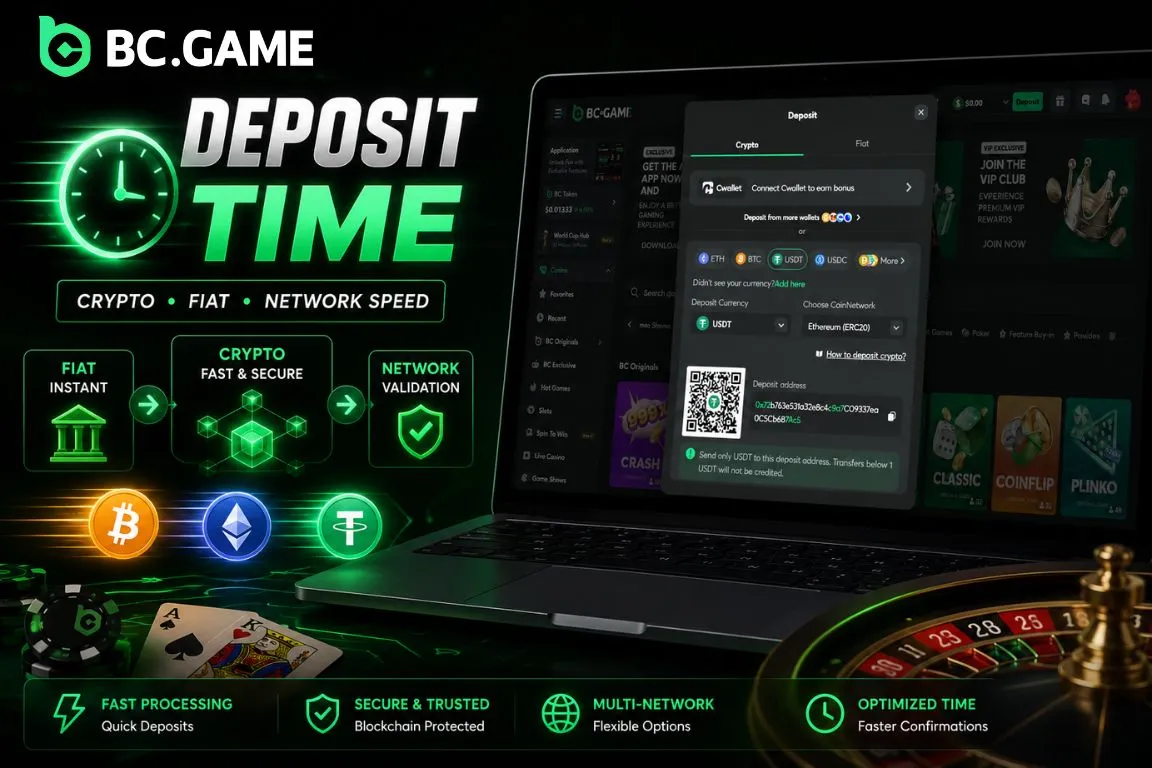
The average BC.Game deposit time depends primarily on the selected payment method. Fiat transfers often appear almost instantly after banking confirmation, while cryptocurrency transfers require blockchain validation before the wallet balance updates.
Several operational conditions influence the timing structure:
- Current mempool congestion levels on networks like Bitcoin or Ethereum;
- Processing cycles of local banking clearinghouses during weekends;
- The exact gas fee allocation attached to the outbound crypto transaction;
- Internal platform automated security vetting queues for high-volume balances.
During periods of high blockchain activity, Bitcoin and Ethereum transfers may remain pending longer than expected, even when the funds already left the sender’s wallet.
Cryptocurrency deposits still provide several operational advantages for international users:
- Stablecoins reduce exposure to currency volatility during transfers;
- TRC-20 transactions usually process faster under normal traffic conditions;
- Wallet funding remains available independently from local banking schedules;
- Cross-border payments become simpler compared with traditional wire systems.
These characteristics explain why many users prefer stablecoin-based funding instead of relying entirely on conventional banking rails.
Blockchain Confirmation Requirements per Major Network
Different blockchains require different confirmation depths before the balance appears inside the cashier. TRC-20 transactions commonly require very few confirmations, while Bitcoin deposits often need several completed blocks before the transfer is considered fully secure.
Ethereum timing may fluctuate depending on gas conditions and validator congestion. Litecoin usually processes faster than Bitcoin because of shorter block intervals, although final timing still depends on network traffic.
Time left: 13:47
Last used 6 minutes ago
Troubleshooting Hub: Resolving a BC Game Deposit Problem
Most cases connected with a BC Game deposit problem are related to incorrect blockchain selection, delayed confirmations, or banking interruptions rather than permanent loss of funds. Keeping calm during the diagnostic stage is important because many issues resolve automatically after additional confirmation cycles.
The most common operational mistakes include:
- Transferring an amount that falls strictly below the mandatory threshold;
- Utilizing a wrong or mismatched blockchain network layout;
- Temporary outages affecting banking gateways or payment processors;
- Forgetting to attach the required Memo or Destination Tag for specific tokens.
Searches such as BC Game deposit problem today usually increase during periods of heavy blockchain traffic or temporary banking instability rather than because of platform-wide failure.
The Critical Role of Destination Tags and Memo Fields
Certain cryptocurrencies such as XRP, EOS, and XLM use shared wallet structures that rely on destination identifiers called Memo or Tag values. Without this additional marker, the system cannot determine which specific account inside the pooled infrastructure should receive the incoming payment.
This type of error does not always mean the funds are permanently destroyed, but recovery may require manual investigation and significantly longer support procedures.
Step-by-Step Diagnostics: Action Plan When Funds Are Delayed
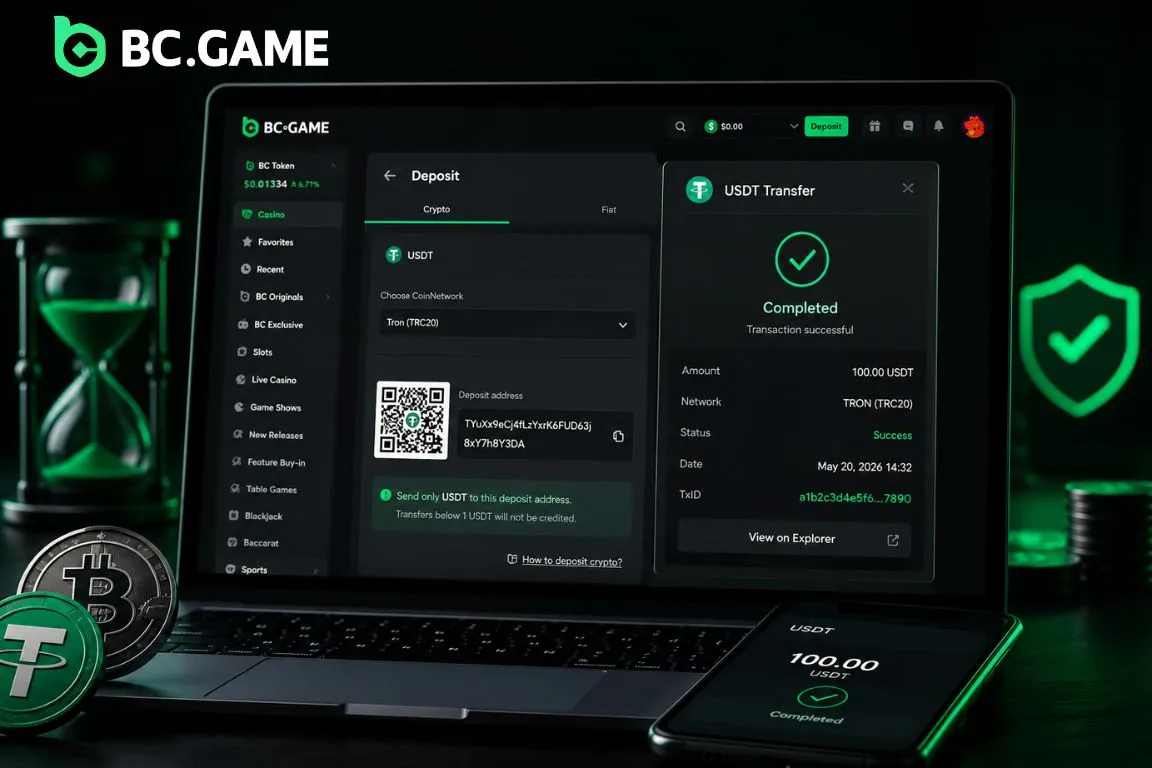
If the transaction already left your wallet but the balance still does not appear, the safest approach is systematic verification instead of repeated transfer attempts.
The recommended recovery sequence usually follows these steps:
- Access your external personal banking app or crypto wallet log.
- Verify that the transaction has successfully achieved a «Completed» or «Success» status on the blockchain explorer.
- Double-check that the destination address matches your assigned portal address exactly.
- Wait for at least 15–30 minutes to account for standard network delays.
Many delayed transfers eventually complete automatically after additional confirmations arrive from the blockchain network.
Traditional banking systems may also generate temporary verification delays under several conditions:
- Weekend clearing cycles slowing interbank processing;
- Additional compliance reviews for larger inbound transfers;
- Temporary mismatches between registered names and banking details;
- Delays caused by intermediary payment gateways during maintenance windows.
These situations are usually operational rather than critical security failures.
Utilizing Public Blockchains to Validate Transaction Routing
Every crypto transfer generates a unique TxID hash. Players can paste this identifier into public blockchain explorers such as Etherscan or Tronscan to verify whether the transaction successfully left the original wallet and entered the blockchain network.
This independent verification method helps confirm that the funds are moving correctly even if the cashier balance has not updated visually yet.
Automated Balance Enhancements and Loyalty Account Onboarding

Once a successful BC Game deposit reaches the wallet system, the account automatically updates several internal progression metrics. The platform uses integrated progression mechanics rather than external activation systems.
Successful funding may contribute to:
- XP accumulation tied to wagering activity;
- Access to selected account features and promotional systems, where available;
- Passive advancement through account loyalty tiers;
- Gradual unlocking of selected internal balance functions.
These automated account balance upgrades operate continuously after the inward funding process is validated successfully.
Instant Progress Integration and Lucky Spin Allocations
The moment a confirmed deposit appears inside the account, the internal progression systems refresh automatically. This allows users to interact with the loyalty infrastructure immediately instead of waiting for delayed synchronization.
The process is fully automated and connected directly to the cashier validation engine.
Time left: 13:47
Last used 6 minutes ago
Mobile Interface Security: Funding Your Account via Smartphones
Many users now access gaming ecosystems primarily through smartphones instead of desktop devices. The PWA cashier interface is optimized for fast loading, QR scanning, clipboard copying, and simplified wallet interaction across a wide range of mobile devices and connection types.
The most important mobile security practices include:
- Never share screenshots of your unique dynamic deposit QR codes with third parties;
- Ensure you are connected to a secure mobile data network rather than public Wi-Fi;
- Always use the integrated «Copy Address» digital action button to avoid manual typing mistakes.
These habits significantly reduce the probability of routing mistakes during cryptocurrency transfers.
Escalating Unresolved Cashier Discrepancies to Technical Specialists
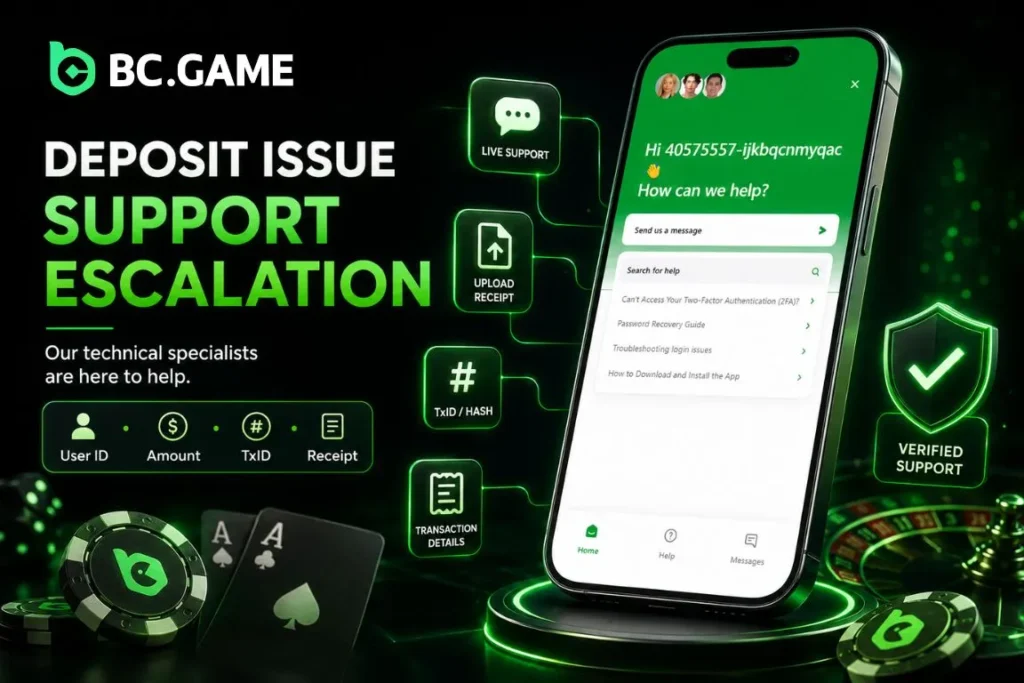
If the system still fails to detect the deposit automatically after confirmations are completed, the next step is submitting a properly structured support request.
The correct escalation process normally follows these steps:
- Open the interactive Live Support chat module.
- Select the specific category designated as «Cashier / Deposit Issues».
- Provide your unique User ID, the exact amount, and paste the valid TxID (Transaction Hash).
- Upload a clean image or digital receipt showing the successful outbound transmission details.
Organized technical information allows support specialists to trace the transaction much faster.
Conclusion: Reliable and Fast Asset Auditing for Global Players
Modern inward payment systems depend on transparent routing, blockchain verification, and properly structured security procedures. The cashier architecture behind the BC Game deposit ecosystem combines dynamic thresholds, visible confirmation tracking, and responsive technical support designed for international users.
For global users working with both crypto wallets and traditional payment methods, clear cashier limits, visible BC.Game deposit time indicators, and access to support tools make the funding process easier to track. Delays may still happen because of blockchain congestion, banking reviews, processor maintenance, or regional payment rules, but TxID auditing and network verification help users understand where the transfer currently stands.